- Published on
Role of Probiotics and Prebiotics in Gut Health
- Authors

- Name
- Nitesh Kumar Patel
- @
Overview
- What Are Probiotics?
- What Are Prebiotics?
- The Symbiotic Relationship Between Probiotics and Prebiotics
- Conclusion
- References
Maintaining a healthy gut is essential for overall well-being, as it affects everything from digestion to immunity. Two critical components in promoting gut health are probiotics and prebiotics (Zhao et al., 2020).
- Probiotics are live microorganisms that provide health benefits when consumed in adequate amounts (Yang & Zhang, 2021).
- Prebiotics, on the other hand, are non-digestible food components that promote the growth and activity of beneficial bacteria in the gut (Gibson & Roberfroid, 2017).
Together, probiotics and prebiotics form a powerful combination that supports digestion, immunity, and even mental health.
What Are Probiotics?
Probiotics are beneficial bacteria that help maintain a balanced microbiome, the community of microorganisms in your gut. They play a role in:
- Improving Digestion: Probiotics help break down food and absorb nutrients (Yang & Zhang, 2021).
- Boosting Immunity: They support the immune system by enhancing the body’s natural defense mechanisms (Zhao et al., 2020).
- Managing Infections: Probiotics help fight off harmful bacteria and pathogens, preventing infections (Zhao et al., 2020).
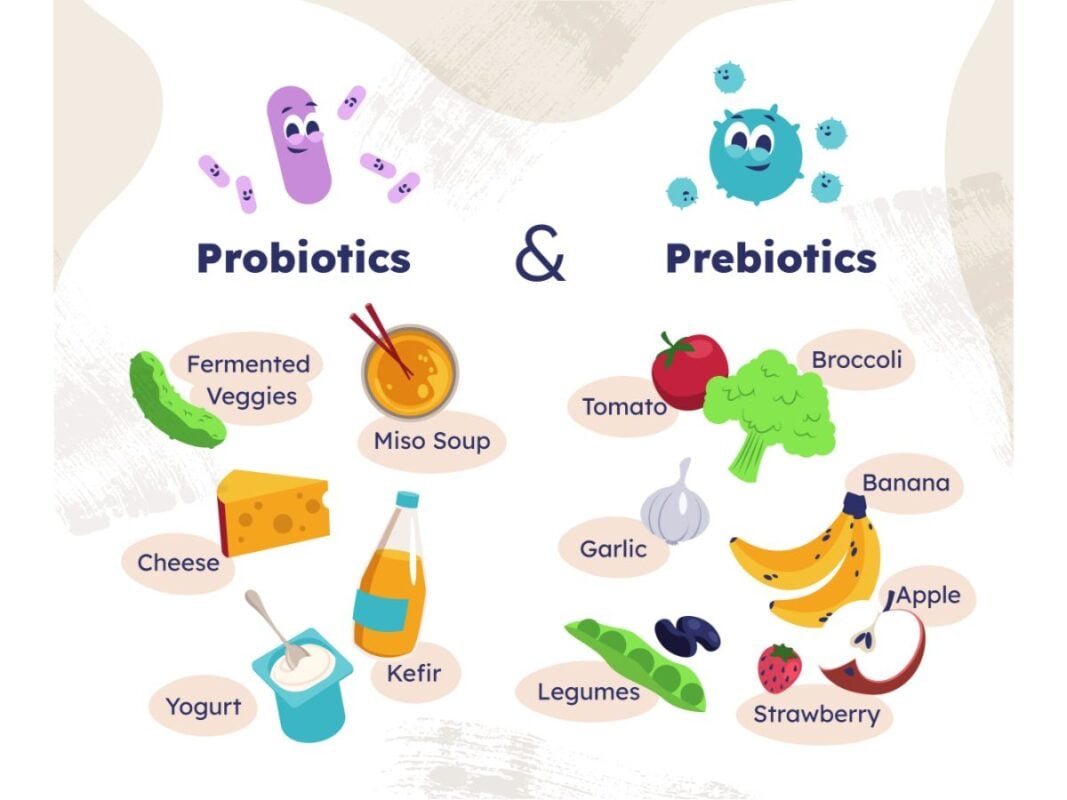
Common sources of probiotics include fermented foods such as yogurt, kefir, sauerkraut, kimchi, and kombucha.
What Are Prebiotics?
Prebiotics are types of fiber that act as food for the good bacteria in your gut. Unlike probiotics, prebiotics are not live organisms but instead nourish and stimulate the growth of beneficial bacteria (Gibson & Roberfroid, 2017).
Prebiotics are naturally found in many plant-based foods, such as:
- Bananas
- Garlic
- Onions
- Asparagus
- Oats
By supporting the growth of healthy gut bacteria, prebiotics enhance the effects of probiotics, creating a synergistic effect that promotes overall gut health (Gibson & Roberfroid, 2017).
The Symbiotic Relationship Between Probiotics and Prebiotics
When combined, probiotics and prebiotics create a synbiotic effect, where the prebiotics help the probiotics thrive, and the probiotics contribute to the breakdown and utilization of the prebiotics. This balance is crucial for maintaining a healthy gut microbiome.
How This Combo Benefits Health:
- Digestive Health: By improving gut flora balance, they help with issues like bloating, constipation, and diarrhea (Yang & Zhang, 2021).
- Immune Function: The gut plays a significant role in immunity, and a healthy gut microbiome supports better immune responses (Zhao et al., 2020).
- Mental Health: The gut-brain connection is strong, and a healthy microbiome has been linked to better mood regulation and reduced anxiety (Yang & Zhang, 2021).
Conclusion
Incorporating both probiotics and prebiotics into your diet is a powerful strategy for optimizing gut health. Whether through fermented foods for probiotics or fiber-rich fruits and vegetables for prebiotics, these nutrients work together to enhance digestion, immunity, and overall well-being.
As research continues to unfold, the synergy between probiotics and prebiotics offers promising solutions for improving health in natural, holistic ways.