- Published on
Gene editing
- Authors

- Name
- Nitesh Kumar Patel
- @
Overview
Gene editing, the ability to make precise alterations to the DNA of living organisms, has emerged as one of the most transformative tools in modern biotechnology. From curing genetic diseases to improving crop resilience, gene editing holds the potential to address some of the world's most pressing challenges. In particular, technologies like CRISPR-Cas9 have made it easier, faster, and cheaper to edit genes with high precision, opening new avenues for both medical and agricultural advancements (Zhang, 2023).
While the promise of gene editing is undeniable, it also raises ethical questions and concerns, particularly regarding its use in humans. As we continue to push the boundaries of what is genetically possible, it is essential to carefully consider both the scientific and societal implications of this groundbreaking technology (Porteus, 2021).
What Is Gene Editing?
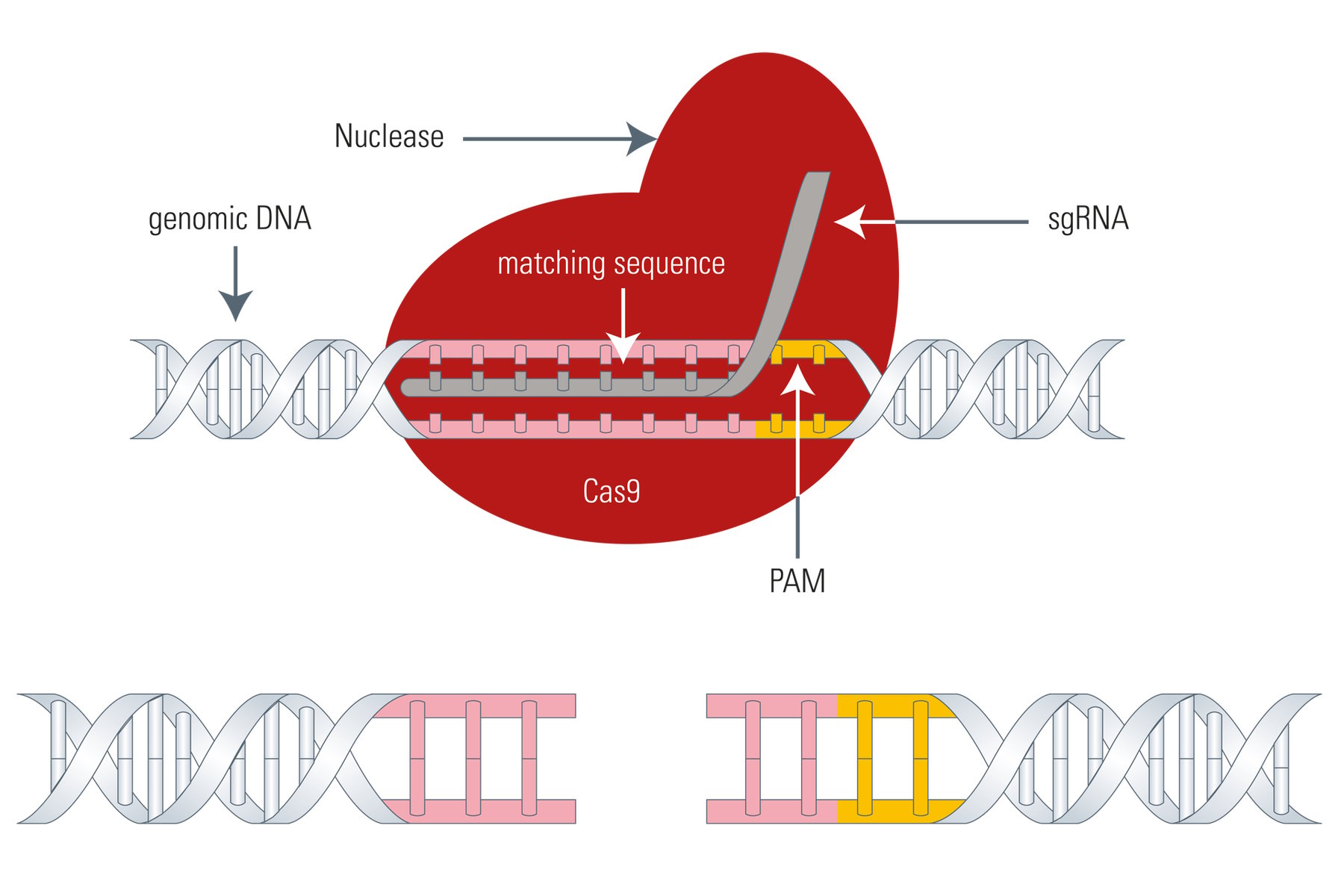
Gene editing refers to the deliberate modification of an organism's DNA. Unlike traditional genetic modification methods, which often involve the random insertion of foreign DNA, gene editing allows for precise changes to be made to specific locations in the genome. The most well-known gene editing tool today is CRISPR-Cas9, a system originally discovered in bacteria that acts as a kind of "genetic scissors" to cut and modify DNA at targeted points (Doudna & Charpentier, 2012).
Gene editing techniques have the ability to:
- Insert genes: Adding new genetic material into an organism’s genome.
- Delete genes: Removing specific genes or sequences from the genome.
- Correct mutations: Fixing genetic mutations that cause diseases, such as cystic fibrosis or sickle cell anemia.
These capabilities open up countless possibilities for advancing human health and enhancing agricultural productivity.
Key Technologies in Gene Editing:
- CRISPR-Cas9: This tool uses a guide RNA to target a specific sequence of DNA, where the Cas9 enzyme makes a cut, enabling the addition, removal, or alteration of genetic material (Zhang, 2023).
- TALENs (Transcription Activator-Like Effector Nucleases): Similar to CRISPR, TALENs are another method for making targeted genetic modifications, though they are more complex and less widely used than CRISPR (Porteus, 2021).
- Zinc Finger Nucleases (ZFNs): A type of gene-editing tool that binds to specific DNA sequences, cutting the DNA to allow for genetic changes [@Urnov2010].
Gene Editing in Medicine
The potential for gene editing to transform medicine is perhaps most evident in its ability to treat genetic diseases. By directly altering the DNA responsible for a disease, scientists can potentially cure disorders that were previously thought to be untreatable.
Genetic Disease Treatment:
- Sickle Cell Anemia: Gene editing has already shown promise in treating sickle cell disease by correcting the genetic mutation that causes abnormal hemoglobin production. Clinical trials using CRISPR have demonstrated success in reprogramming patients' stem cells to produce healthy red blood cells [@Smith2023].
- Cystic Fibrosis: Researchers are exploring the use of CRISPR to repair the defective CFTR gene responsible for cystic fibrosis, offering the possibility of a one-time cure rather than ongoing treatments (Doudna & Charpentier, 2012).
Cancer Therapy:
Gene editing is also being explored for cancer immunotherapy, where immune cells are edited to better recognize and attack cancer cells. Early research has shown promise in using gene editing to enhance T-cell therapies for certain types of cancer, such as leukemia and lymphoma [@Kymriah2022].
Gene Editing in Agriculture
In agriculture, gene editing is being used to create crops with desirable traits, such as increased resistance to pests, diseases, and environmental stresses. Unlike traditional genetic modification, which often introduces foreign genes, gene editing allows for more precise alterations to the plant's own genome, making the process more efficient and acceptable to some consumers.
Enhancing Crop Resilience:
- Drought Resistance: By editing the genes of crops like corn and wheat, researchers have been able to create plants that are more resistant to drought, helping ensure food security in regions prone to water scarcity [@Bellucci2023].
- Pest Resistance: Gene editing can also be used to develop crops that are resistant to pests, reducing the need for chemical pesticides and increasing sustainability in farming practices (Zhang, 2023).
Disease Resistance:
Gene editing is also being used to create disease-resistant crops. For example, scientists have been working to edit the genomes of bananas to resist the devastating Panama disease, which has wiped out entire banana plantations worldwide [@Jones2023].
Ethical Considerations
While the benefits of gene editing are clear, there are several ethical concerns that must be addressed. One of the primary concerns is the potential for germline editing, which involves making changes to the DNA of embryos. These changes could be passed on to future generations, raising questions about the long-term impact on the human gene pool and the potential for unintended consequences (Porteus, 2021).
Another ethical concern involves the potential for designer babies, where parents could choose specific traits, such as intelligence or physical appearance, for their children. While this idea remains controversial and currently unfeasible, it presents a scenario that many scientists and ethicists are closely monitoring.
Furthermore, gene editing in agriculture also raises questions about the potential impact on biodiversity and the environment. While genetically edited crops can offer many benefits, there are concerns about their long-term effects on ecosystems and the potential for cross-contamination with non-genetically modified plants.
Conclusion
Gene editing is a powerful tool that promises to revolutionize fields ranging from medicine to agriculture. As we continue to unlock its potential, it is crucial to approach this technology with caution and consideration. Whether through curing genetic diseases or creating more resilient crops, gene editing has the potential to solve some of the world’s most pressing problems, but it also requires careful ethical and regulatory oversight to ensure that its benefits are realized safely and responsibly.
As research progresses, the future of gene editing looks promising, but it is clear that society must remain vigilant in addressing the ethical, ecological, and health-related concerns that accompany this powerful technology.